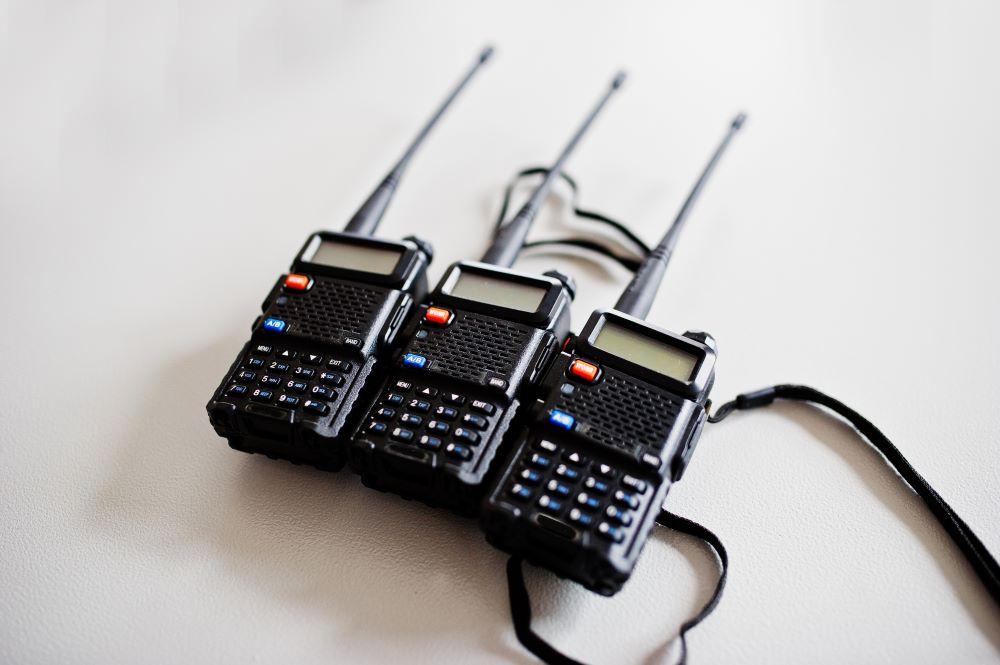
Have you always wanted to get into amateur ham radio, and finally pulled the plug and bought your own amateur radio equipment set? Well now comes the challenging part: figuring out how to use it properly.
You’ll most likely make several mistakes in the beginning, as it is with any new hobby or interest. However with diligence and practice, you’re sure to become an experienced ham radio operator in no time.
Here are 3 of the most common mistakes first-time ham radio operators make, and how you can avoid them.
1. Not speaking clearly
A top mistake when using ham radio equipment for the first time is not speaking clearly – and it’s a mistake advanced or experienced users may accidentally make too! While you might be used to speaking in your usual tone and speed of voice on your smartphone, you will need to be more conscious of how you’re speaking when using a ham radio.
Here’s how you can ensure your message is heard loud and clear:
Hold the microphone or radio about 5-7 cm away from your mouth
Always aim your voice at the mic when speaking
Speak clearly and enunciate
In emergency situations, stay calm and continue to speak with a measured voice so your message won’t get lost in transmission
2. Using incorrect programming
If you’ve wanted to get into ham or amateur radio for a long time, you’ll understandably feel very excited to finally have your own ham radio equipment set. That often leads to a common rookie mistakes by first-time ham radio operators, which is getting overexcited and using the wrong programming or settings on your device.
Even if you’re excited to dive into the world of ham radio, it’s best to start with the basic controls of ham radio equipment. Don’t get too carried away with all of the additional features your ham radio set offers just yet. Instead, figure out how to get the Frequency, Offset, and Tone configured to suit your local repeaters and frequencies first. Once you’ve gotten the hang of this, you can move on to exploring all of the exciting features your transceiver has in store for you.
3. Not practicing with your radio enough
Many people buy amateur radio equipment in case of an emergency, and fail to familiarise themselves with the equipment by the time an actual emergency occurs. Even if you only intend to use your set under dire circumstances, you should take the time to understand and practice with the equipment the moment your radio set arrives. This ensures that you will feel well-prepared to use your ham radio in an emergency.
You might also feel overwhelmed or intimidated by your new equipment at first, and hence uncertain about using it. Start small by reaching out to other ham radio operators in your area, or occasionally scan for frequencies to find one that has some activity. You might not always get a response back, but these attempts will add up over time and build your confidence in using your ham radio.
If you are the captain of a marine vessel, it is your duty to ensure that you and your crew can carry out your tasks and responsibilities safely. When you’re out at sea, even the smallest of mistakes or oversights can lead to devastating consequences.
Whether you are piloting a small craft with just a handful of crew members, or at the helm of a much larger cargo vessel, you have the obligation to make sure all of your crew will return back to shore unharmed.
Here are 5 basic marine safety and boating tips to get you started.
1. Ensure you have the proper safety equipment on board
Having the right safety equipment on board your vessel could quite literally mean the difference between life and death during an emergency. Many vessels are already required to meet the safety standards set out by treaties like the 1974 International Convention for the Safety of Life at Sea (SOLAS), which mandates or recommends essential maritime safety equipment and procedures.
Some of the equipment required by SOLAS includes:
NAVTEX: NAVTEX is an internationally recognised and used marine communication system for vessels to receive maritime safety messages. These range from weather updates to ice reports to navigational messages.
GMDSS: The Global Maritime Distress and Safety System (GMDSS) is an internationally recognised distress and radio communication system, specifically designed and intended for safety purposes out at sea. It is mandated under SOLAS for certain classes of vessels, and serves as both a transmitter and receiver of emergency and general broadcasts. GMDSS is available in both GMDSS (Fixed Mount) and GMDSS (Survival Craft Radio) formats.
2. Conduct regular equipment maintenance and checks
Having the right safety equipment is just the beginning. You should schedule regular maintenance, inspection, and upkeep sessions for your equipment to ensure that it is working as it should. Sudden mechanical failure is still a possibility, and you don’t want to realise this only when you’re already out at sea. Keep detailed checklists and records on board your vessel at all times so that you can have peace of mind before casting off.
3. Choose your crew wisely
Picking the right crew is key to ensuring a trip or operation goes smoothly. If you are anticipating rough weather conditions or a long-haul operation for example, you should select crew members who have the relevant experience and appropriate credentials to handle the vessel throughout those conditions.
4. Keep communication lines open
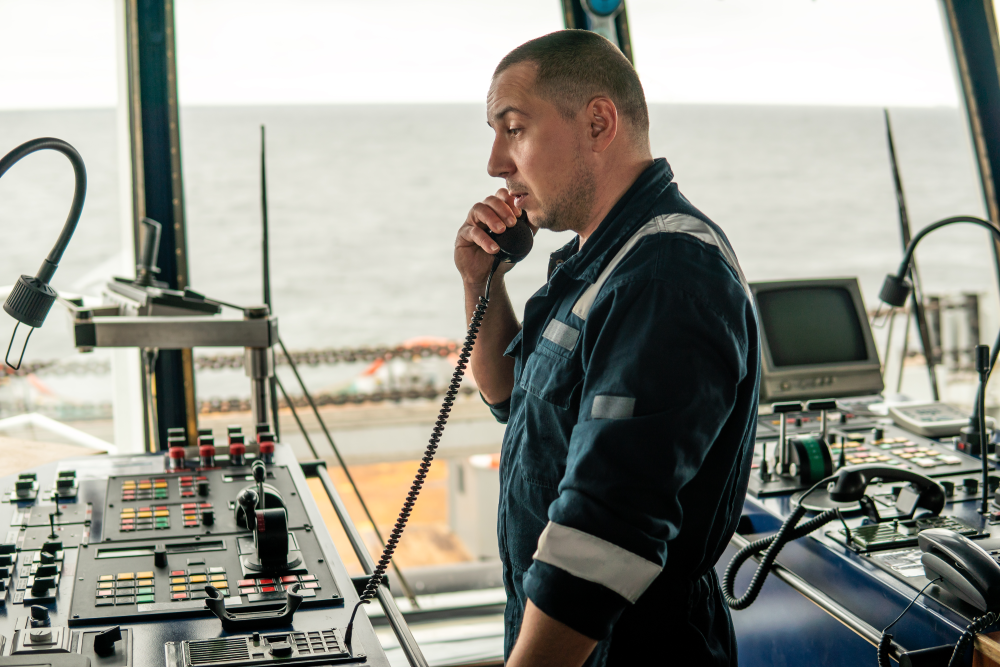
Once you have your trusted crew on board, it’s important to keep lines of communication open. This encompasses communication with authorities and other crew members back on the ground, as well as between crew members on the vessel itself. Clear communication helps you minimise human error, and can prevent accidents that could lead to severe consequences. Buying additional equipment like loud hailers or handheld VHF marine radio can also come in handy in helping on-deck crews communicate effectively.
5. Set a good example for your crew
As the captain, you are the de facto leader of your crew and your crew members will be taking their direction of how to act from you. This will extend from day-to-day situations to unexpected emergencies where your firm guidance is necessary to keep everyone safe.
Shop Essential Marine Vessel Equipment at Tecomart
We have been in the communication and navigation technology business since 1994, and offer a wide range of products from notable brands such as ICOM, Yaesu, and Garmin. We also stock amateur radio equipment, aviation communication equipment, and outdoor navigation equipment to meet your needs in a wide variety of situations and environments.
From loud hailers to handheld radio sets, you’ll easily find the equipment you need for sale in our catalogue. Get in touch for a quote, or see our FAQs for more information.
If you’re involved in the amateur radio or ham radio scene, you know that you only need some basic amateur radio equipment to get started.
At the bare minimum, you’ll need a HF transceiver and antenna, which connects you to the signal range and network you want to communicate on. Many amateur ham radio operators can get by on these two equipment types alone, especially if they might not want to commit to a more expensive setup.
However, if you intend to continue with this hobby and want to improve your ham radio experience, this might be when you consider getting additional equipment like two-way radio repeaters and antenna rotator systems.
Today, we’ll be looking at the latter: just what is an antenna rotator system, and when should it be used? Is it amateur ham radio equipment that’s necessary for every ham radio enthusiast to have? Read on for answers to these questions and more.
What do Antenna Rotator Systems do?
As their name suggests, antenna rotators are mechanical devices that help to rotate your directional antenna so that it ‘points’ at a particular set of coordinates. While some antennas have built-in features enabling them to do this, many other antennas require manual ‘pointing’ as the antenna needs to be held in place to keep the signal stable. This is where an antenna rotator system comes into play.
This enables you to access a specific desired direction and signal-to-noise ratio, letting you have more focused access to certain signals which can broaden your reach and reception on the ham radio network in your area. This usually makes the signal louder and clearer, improving communication on both sides.
There are 2 main types of antenna rotator systems:
Azimuth rotators: Azimuthal rotators rotate your antenna parallel to the horizon (i.e. spin them around along the horizontal plane) but cannot point them upwards towards the sky.
Azimuth elevation rotators: Azimuthal elevation rotators can both rotate your antenna parallel to the horizon and elevate them. This type of antenna rotator is more useful for satellite radio applications.
When should you use an Antenna Rotator System?
Not every ham radio enthusiast needs to beef up their setup with an antenna rotator system, and you can certainly continue with the hobby without ever using a rotator. However, antenna rotator systems can be useful in enhancing your ham radio experience under certain conditions.
First, if you live in an area with uncertain weather conditions, or if you otherwise need to keep up reliable communication lines. Antenna rotators help ensure reliable and steady communication at all times, which is extremely important during emergency situations.
Second, if you want to broaden your reach across ham radio networks and have a more immersive ham radio experience. If you’re only just starting out in ham radio, you may not want to commit to additional equipment just yet. However if you feel confident about continuing in the hobby, an antenna rotator system will certainly give you an easier and more meaningful ham radio experience.
Do note that your rotator and antenna will need to be set up on a roof or garden, with unobstructed line of sight to the network you’re trying to connect to. If you live in an apartment building, you will need to find a suitable location to install both your antenna and rotator system.
Selecting your Antenna Rotator Systems
When purchasing your antenna rotator system, you should look at factors such as environment (e.g. wind strength, frequency of strong winds or tropical storms), antenna size, antenna weight, and rotator type. Mechanical considerations also matter, such as the load-bearing capacity and torsion. These will all affect the height and size of antenna compatible with your rotator system.
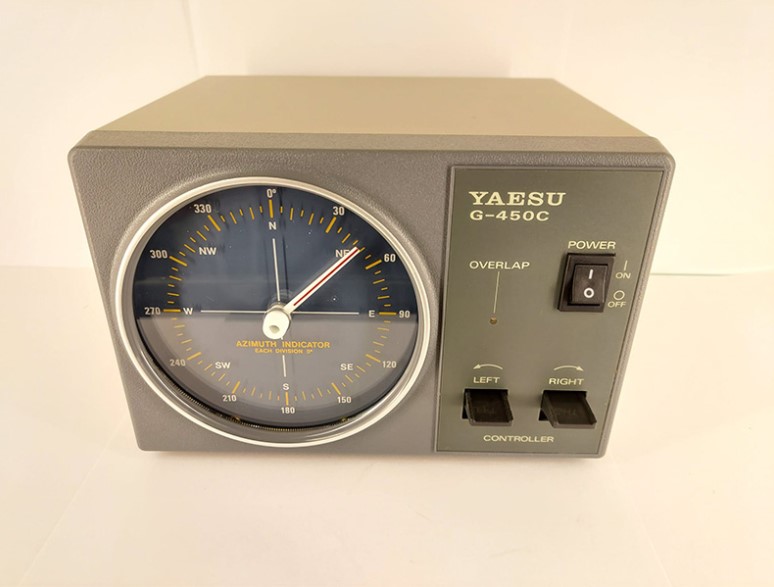
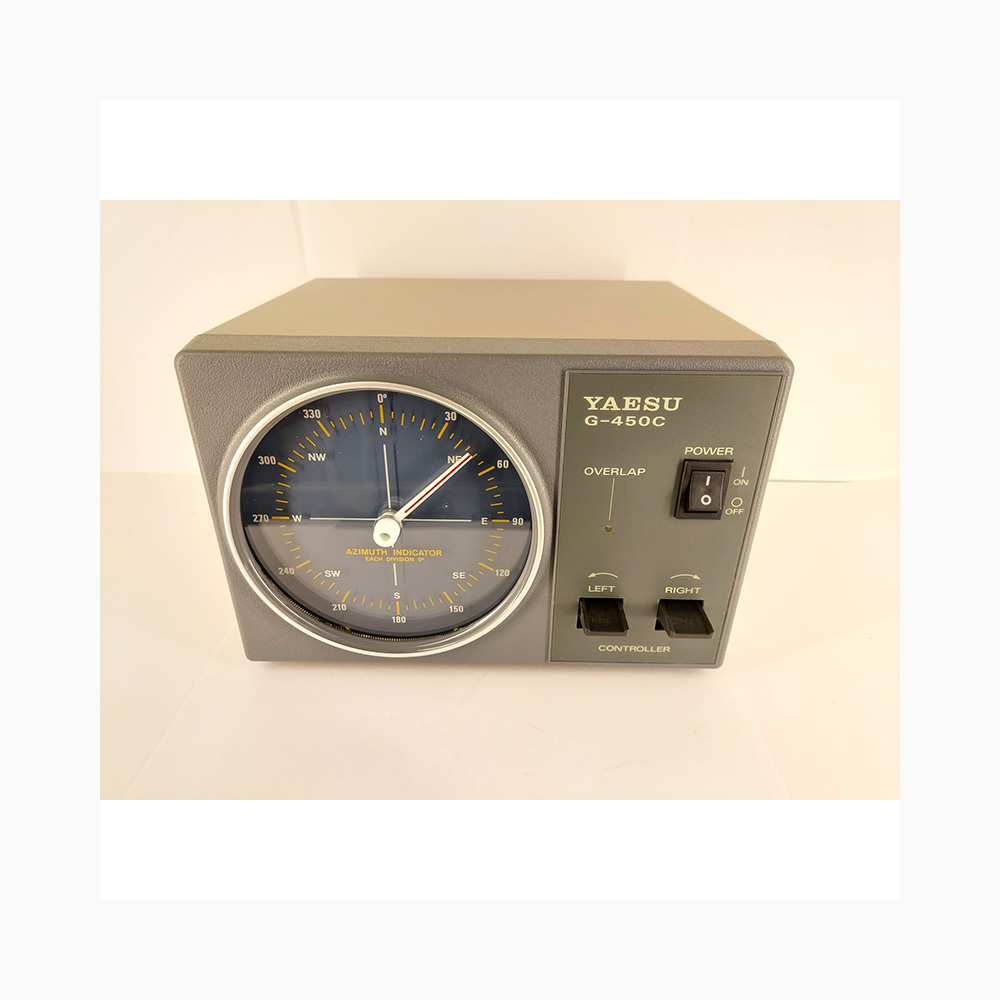
Shop a range of antenna rotator systems for sale on Tecomart. From the entry-level Yaesu G-450C (pictured) for light- to medium-duty installations, to the Yaesu G-800DXA high-performance rotator with medium- and heavy-duty installations, we bring you quality antenna rotator systems to suit your needs.
The activity, hobby, and even industry of fishing has been around for millennia all around the world. However, for thousands of years, fishermen and anglers needed to depend on luck or their eyesight to uncover the best catches.
Today’s fishermen (whether casual or commercial) don’t have to struggle with these rudimentary tracking methods to come away with a catch of the day – and it’s all thanks to fishfinders.
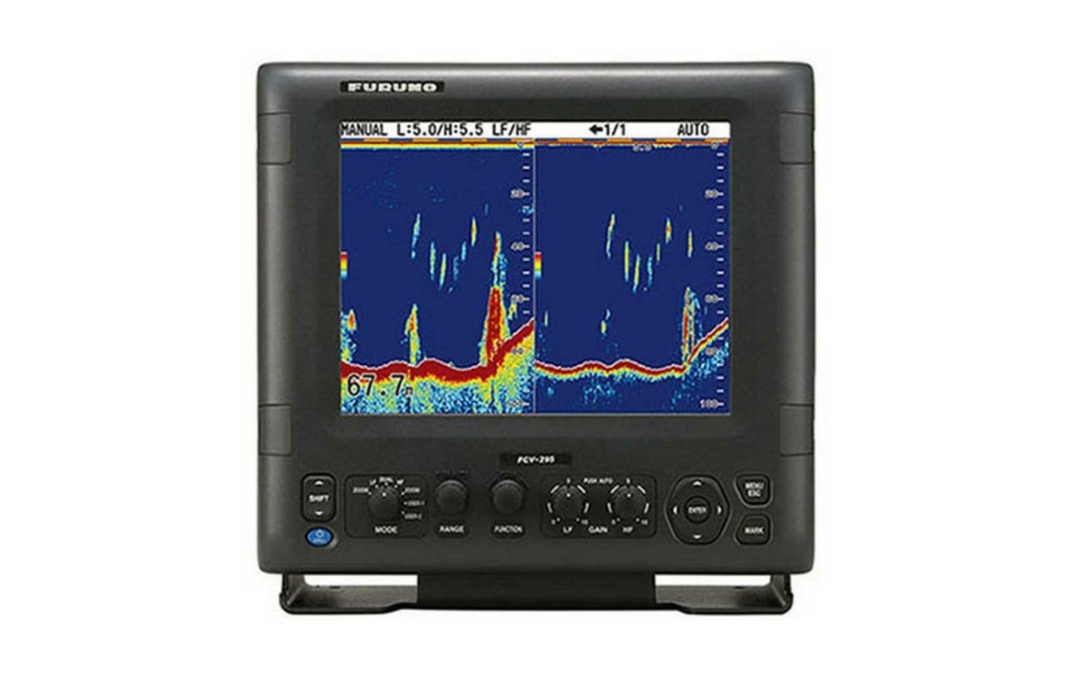
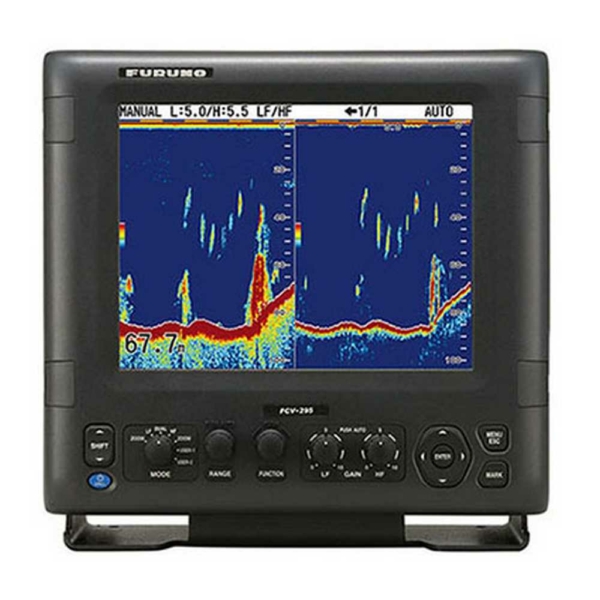
Sometimes also referred to as echo sounders, fishfinders are a type of marine sonar specifically designed to detect schools of fish below and around a boat or ship. This piece of equipment has greatly revolutionised the fishing industry – and it hasn’t even been around for a century yet!
The Early Years
Opinions on who created the first fishfinder tend to be split between two camps.
As early as 1948, Kiyotaka Furuno (co-founder of the renowned electronics brand Furuno) began to commercialise the world’s first fishfinding device: the Furuno Fish Finder. The device did not use sonar but rather worked by detecting bubbles in the water. It was also targeted at commercial vessels, rather than recreational or non-commercial usage.
In 1957, Lowrance Marine & Fishing Electronics released the Fish Lo-K-Tor, the first fishfinder targeted at recreational fishermen. While sonar technology made it more reliable than Furuno’s version, the Fish Lo-K-Tor worked best on smooth bottoms such as sandbars, and debris such as shell, sand, or gravel could interfere with its accuracy. The Fish Lo-K-Tor also required anglers to manually adjust the gain function, making it prone to human error.
Research and Development
The Furuno Fish Finder and Lowrance Fish Lo-K-Tor were only the start, and other companies began to manufacture fishfinders and echo sounders throughout the 1960s to 1990s. One such company was Humminbird, which introduced the Humminbird Super Sixty fishfinder in 1975. The Super Sixty was the first waterproof depth sounder ever, and remains one of the most commercially successful fishfinders today.
Humminbird’s later products in the 1980s and 1990s included the LCR series (the first LCD fishfinders) and the LCR 4ID (which had a two-colour display that showed the fish in red for easier visibility), both of which pushed fishfinding technology forward and emphasised user-friendly design.
Since the dawn of the 21st century and the refinement of sonar technology, fishfinders and echo sounders have undergone massive improvements – making them unrecognisable compared to Furuno and Lowrance’s earliest efforts.
Humminbird was at the forefront of this wave once again, with the launch of Side Imaging technology in 2005. This widened the visual scope of what a fisherman could see from his vessel, creating a faithful and more detail-oriented representation of the watery ‘world’ underneath the boat rather than just a vertical interpretation.
In 2009 Lowrance followed up with the StructureScan, which could produce high-resolution 3D scans of underwater terrain and fish-holding structures, with views up to 600 feet on each side of a vessel. Humminbird’s 2012 release of 360 Imaging (an improvement of Side Imaging) only enhanced this feature further, with a full 360-degree view around all sides of a vessel.
Garmin’s 2015 Panoptix changed the game by merging an instant feedback transducer with GPS in the Garmin SideVü. This allowed fishermen to watch, observe, and track their fish in real time, and the inclusion of GPS also enhanced their tracking capabilities.
Since then, companies have continued to push the boundaries of sonar innovation even further. Recreational and commercial fishermen today have a wide variety of fishfinder companies to choose from, each of which has its unique take on echo sounding technology and additional features to boot.
Those who work outdoors, at sea, or in remote locations will know the importance of being able to maintain open communication lines with your teammates, colleagues, and other key personnel. In areas and situations such as these, typical mobile communication options are out of the question – rendering the otherwise ubiquitous smartphone useless.
This is where communication equipment such as radio comes into the picture. Radios are still the go-to for work sites and teams who need to be certain that they can keep up with day-to-day and even minute-to-minute updates while on the job. They also come in fixed-mount formats (which are typically larger and meant for the whole crew) and handheld formats great for keeping on your person, each of which serve their own purpose.
Today, we’ll be focusing on handheld radio sets used to communicate one-on-one with someone else. However, there are many types of radios available with various frequencies – how do you know which one suits your needs best?
What are VHF and UHF Handheld Radio?
Two of the most common handheld radio frequencies available are Very High Frequency (VHF) and Ultra High Frequency (UHF). While there are some similarities between the two, it’s their differences that will affect the situation or use case they’re best suited for.
When buying a new VHF or UHF handheld radio set, here are the basics you need to consider first:
Is your existing system VHF or UHF? It’s recommended to get the same type as your current system so that it remains compatible.
Is your existing system radio or analogue? Digital and analogue equipment may not be compatible with each other.
Are there specific features you are looking out for? Different manufacturers use different specifications in their equipment or may provide additional features and service warranty guarantees.
If you already have an existing system, your decision should be pretty straightforward. However, if you are buying a radio system for the first time you might be wondering: VHF VS UHF – which one will suit me best?
When should you use VHF?
VHF radio waves cover a huge broadcast range between 30 MHz to 300 MHz, although many handheld marine VHF radios cover a dedicated range around 156MHz to 163MHz.
They can travel a further distance compared to UHF frequencies but are limited by line-of-sight – meaning you will need a clear, unobstructed, and visible path to the receiver to guarantee a strong signal. Additional equipment such as marine VHF antennas can help deal with this issue, giving you better range when communicating with others on land while you’re out at sea.
VHF handheld radio sets like the Standard Horizon HX300E are better suited for industries such as agriculture (on land or at sea), long-haul trucking, infrastructure construction, and public safety that are primarily set outdoors.
When should you use UHF?
UHF radio waves cover a larger range between 300MHz to 3GHz, making it possible to get better coverage with minimal interference. As they fall into a higher frequency range, the distance they can travel is limited compared to VHF – making them less suitable for outdoor or marine environments.
Similar to VHF radios, UHF radios also operate on line-of-sight and it is recommended to have a clear path to the receiver to ensure uninterrupted and unobstructed communication. Unlike VHF however, UHF radio waves can transmit through regular building walls in urban environments – making them highly suitable for indoor reception and communication.
UHF handheld radio sets like the ICOM IC-F4003 are better suited for industries such as manufacturing, healthcare, building construction, and warehousing that are located indoors or in a mix of indoor and outdoor environments.
Shop VHF and UHF Marine Radios for Sale at Tecomart
Looking for a trusted and reliable supplier for your communication needs? Tecomart has what you need to ensure you can stay in touch with your colleagues, crew, and clients while out and about. We have a wide variety of VHF marine radio and UHF handheld radio sets for sale on our online shop, now available at affordable wholesale pricing.