Communication is vital in marine travels, whether you’re travelling short or long distance. It becomes even more important when navigating through the open sea so that your vessel can avoid hazards and collisions. However there are times when unfortunate circumstances or accidents may still occur, and your vessel will need immediate support and rescue help.
To ensure that vessels in trouble get the immediate help they need, the International Maritime Organisation has put into place the Global Maritime Distress and Safety System (GMDSS). The GMDSS comprises a universally agreed-upon set of safety procedures, types of equipment, and communication protocols for maritime distress.
In this blog, we go in-depth on what is GMDSS and what equipment is required for your vessel should it need to comply with GMDSS regulations.
What is the GMDSS?
The Global Maritime Distress and Safety System (GMDSS) is an internationally recognised distress and radio communication safety system that was established by the International Maritime Organisation (IMO) at the Safety of Life at Sea Convention (SOLAS) in 1974. This was further amended in 1988 to carry the force of an international treaty and enforce installation in selected vessel types for safety purposes.
The GMDSS provides safety-of-life information and communication systems that relay information to ships about navigation hazards and weather conditions. Ships with GMDSS can enable distress calls with pertinent location and identification information through just a push of a button. The system offers a link between Search and Rescue (SAR) authorities ashore and other vessels within range of the vessel in distress, so that both land and sea resources can be delivered efficiently for SAR operations.
GMDSS equipment combines both satellite and terrestrial communication systems to fulfil a number of functional requirements while ships are at sea. Functional requirements include the following:
Transmit ship-to-shore distress alerts by at least two separate and independent methods
Receive shore-to-ship distress alerts
Transmit and receive ship-to-ship distress alerts
Transmit and receive search and rescue coordinating communications
Transmit and receive on-scene communications
Transmit and receive signals for locating
Transmit and receive maritime safety information
Transmit and receive general communications
Transmit and receive bridge-to-bridge communications
Several sub-systems are typically installed as part of GMDSS requirements for marine vessels:
406 MHz Emergency Position Indicating Radio Beacons (EPIRB) – EPIRBs are battery-powered radio transmitters that aid in the detection and location of ships in distress. They are both watertight and buoyant, as well as transmit within the range of 406.0 – 406.1 MHz channel. It’s designed to operate with satellites and has been designated for use only for distress.
VHF Radio – VHF refers to very high frequency and is a valuable component of marine mobile radio service as it is used for sending distress messages. Marine VHF radios are two-way communicators that relay and receive messages to and from the responding station. They can be either portable or non-portable. Some even have built-in GPS receivers and AIS receivers.
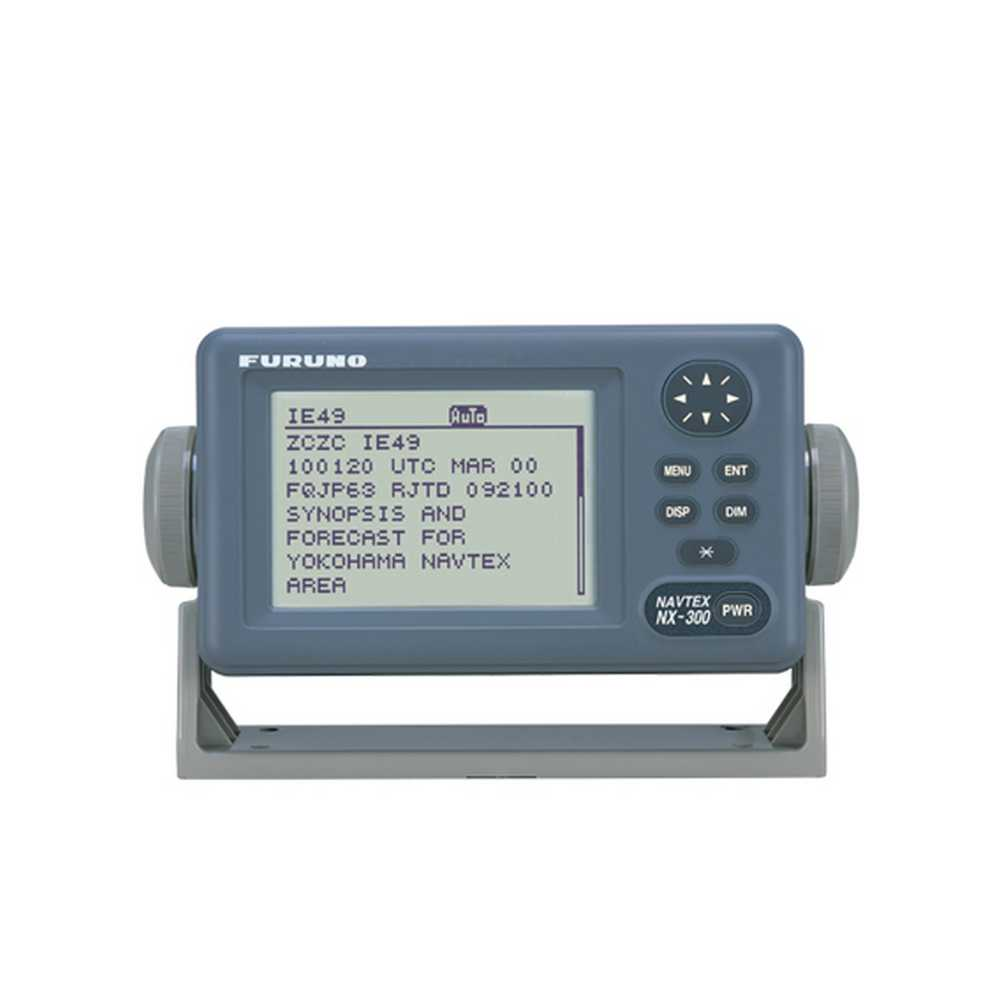
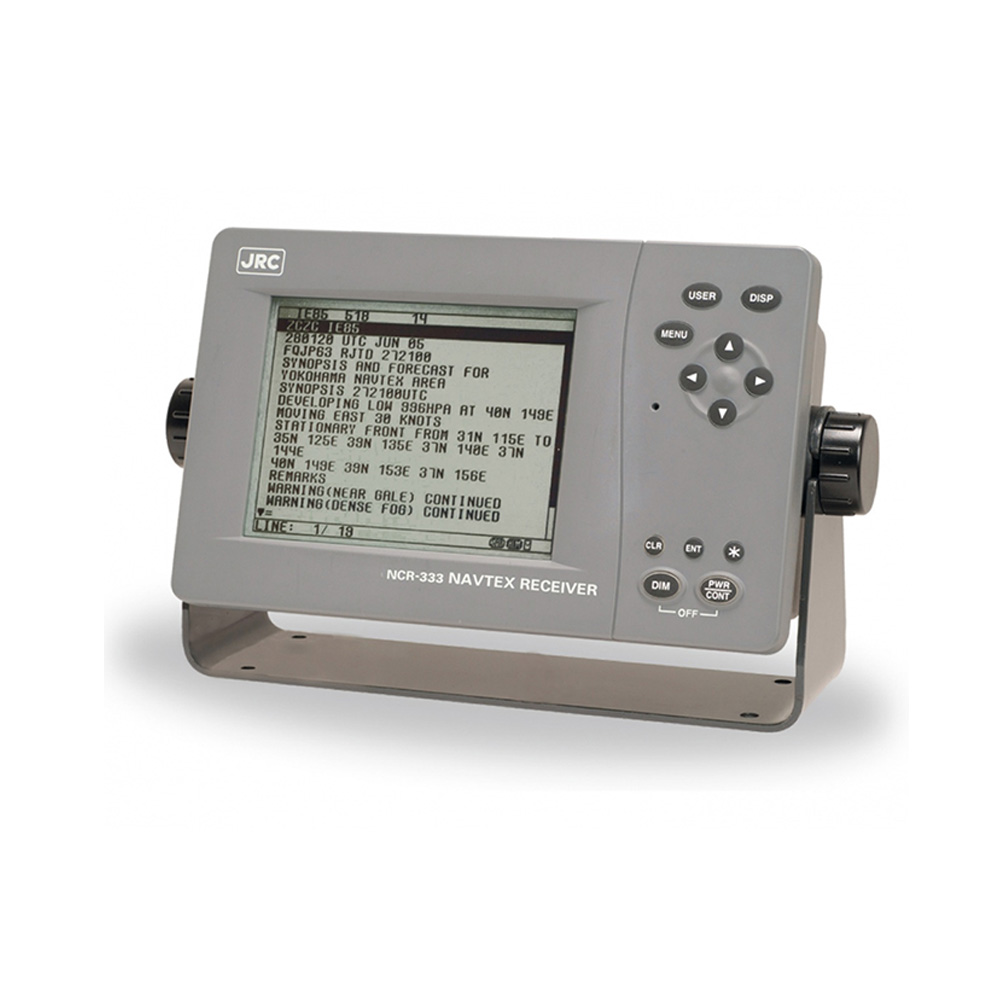
NAVTEX Receiver – Navigational Telex (NAVTEX) receivers are a Narrow Band Direct Printing (NBDP) device that typically operates on the frequency 518 kHz and is a significant part of the GMDSS. It automatically receives Maritime Safety Information, including Radio Navigational Warnings, Meteorological Forecasts, and Distress Alerts, among others. The NAVTEX receiver generally provides coastal warnings that cover the area from the Fairway Buoy out to about 250 nautical miles from the transmitter.
Search and Rescue Transponder (SART) – SART machines help in locating the position of the ship in case it goes off-track during times of distress. They are made of waterproof components and are essentially battery-operated to ensure their full functionality in times of emergencies.
Backup Power System – Ships must have an emergency generator in case the main generating system malfunctions. It must have an independent means of automatically starting, either by air or battery, to ensure immediate use following a main power failure.
How can Vessels and Communications Personnel Comply with GMDSS Regulations?
The international GMDSS regulations are mandatory for ships that meet the following criteria:
Cargo ships of 300 gross tons and over with international voyages or travels in the open sea
Every passenger ship that is carrying more than twelve passengers with international voyages or travels in the open sea
There must also be two licensed radio operators aboard GMDSS-certified ships. Either one should be available to act as a dedicated radio operator during emergency situations. The radio operators should have completed a GMDSS course and are holders of a GMDSS Radio Operator’s Licence.
Purchase GMDSS Equipment for your Marine Vessel at Tecomart
Get reliable marine communication equipment to increase the safety of your voyages at sea when you shop at Tecomart. We have top-of-the-line GMDSS equipment that enables you to quickly communicate to SAR teams within the vicinity when times of distress occur or when you need assistance. Purchase GMDSS equipment from trusted brands, such as SAMYUNG ENC, ICOM, and JRC, and always be prepared as you set sail.
Should you want to know more about our products and services, please contact us.
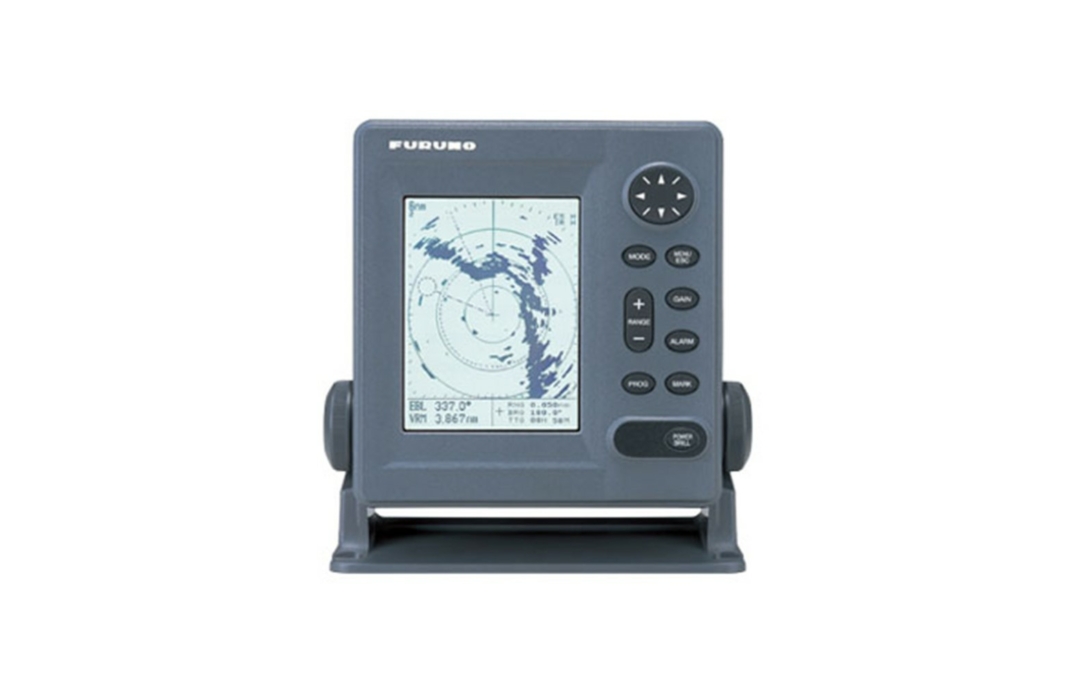
A marine radar is a valuable piece of equipment for any sea vessel. Over the years, its technology has also evolved to better ensure the safety of seafarers as they navigate through vast waters. But what really is a marine radar and how did this helpful piece of marine navigation equipment come to be?
In this blog, we give you a brief overview of what marine radar is, how it works, and how it has changed and advanced over time.
Early Developments in Marine Radar
The first radar dates back over 100 years back to June 1904 when a 22-year-old German engineer, Christian Huelsmeyer, demonstrated his “Telemobiloskop” or “Fernbewegungseher” to technical representatives at a nautical conference in Rotterdam. It was designed to be a “Marine Anti-Collision Device” with technical innovations beyond its time. Unfortunately its benefits and cutting-edge potential were not fully recognised by his audience and Huelsmeyer was unable to translate his creation into a marketable application.
It was only in 1942 during World War II that radar technology progressed, as U.S. and British commercial vessels needed it to improve the safety of navigation and detect enemy ships while at sea.
At the time, they used Relative Motion radar technology which required navigators to plot other ships with a pen on the Plan Position Indicator’s (PPI) display or a plotting screen. This technology was primitive compared to radar technology today: while the coil and radar signals could detect surrounding objects, it would not be able to differentiate if these were foreign ships, lighthouses, buoys, or simply just sea clutter.
As years passed, True Motion radar technology was developed, which was designed to display other ships as targets instead of relative to their own ship. This was done by integrating computer intelligence into the device to improve its logic capacity, allowing marine radars to better identify and categorise surrounding objects.
Swedish shipping company Salenrederierna was the first company to buy Raytheon’s True Motion radar in 1968 and install it in the tanker Sea Sovereign, making the Sea Sovereign the first marine ship with an onboard process computer. While Raytheon’s radar was equipped with various servo motors and receivers as part of its analogue computer setup, it still required a trained seafarer to operate it while making manual adjustments for maximum efficiency.
What is the Modern-Day Marine Radar and How does it work?
Today’s marine radar is a mandatory navigation aid in ships to identify and track the positioning of other vessels and land obstacles to avoid collisions as they go from one point to another. It is classified under the X-band or S-band frequencies.
X-band radars operate on the 8-12 GHz frequency range within the microwave radio region of the electromagnetic spectrum, and are often used for ship traffic control and navigation. They are also typically installed in most large research vessels and offshore installations as they have sharper images and better resolution.
S-band radars, on the other hand, operate on the 2-4 GHz frequency range of and are mainly used for identification and tracking.
Marine radar uses a rotating antenna to sweep a narrow beam of microwaves around the water surface surrounding the ship to the horizon. The microwaves detect targets reflected from them and the radar generates a picture of the vessel’s surroundings on a display screen.
Generally, the radar gives a rough estimate of an object’s distance. This enables the vessel to know how far they are from other ships and land obstacles to prevent collision and ensure safe navigation while on water.
Find Top-of-the-Line Marine Radars for Sale at Tecomart
When buying marine radars today, it’s important to keep in mind that they are rarely used alone. Other navigation displays such as GPS, ship positioning, and sonar display are often displayed alongside radar using multifunction displays.
For commercial ships, marine radars may be integrated into a full suite of marine instruments including GPS chart plotters, two-way marine radio, sonar, satellite navigation receivers, and emergency locators. Innovations in radar and digital communication technology have enabled these devices to better exchange data with one another, providing crew with a comprehensive view of the surroundings to properly manoeuvre the ship.
Harbour masters and coast guards are also equipped with vessel-based marine radars and vessel traffic service radar systems to better manage vehicle movement in ports or at sea.
If you’re looking for high-quality marine radars for sale online, you can trust Tecomart. We provide marine communication and navigation technology from trusted brands to ensure you get reliable equipment when you go out into the waters. In our shop, you can find reputable brands such as JRC, ICOM, SIMRAD, Raymarine, and more.
If you want to know more about our products and services, don’t hesitate to contact us today.
But what about more advanced equipment such as two-way radio repeaters: How do they work? And is it worth it to get one for your vessel for when you’re out at sea?
Here’s what you need to know:
What is a Two-Way Radio Repeater?
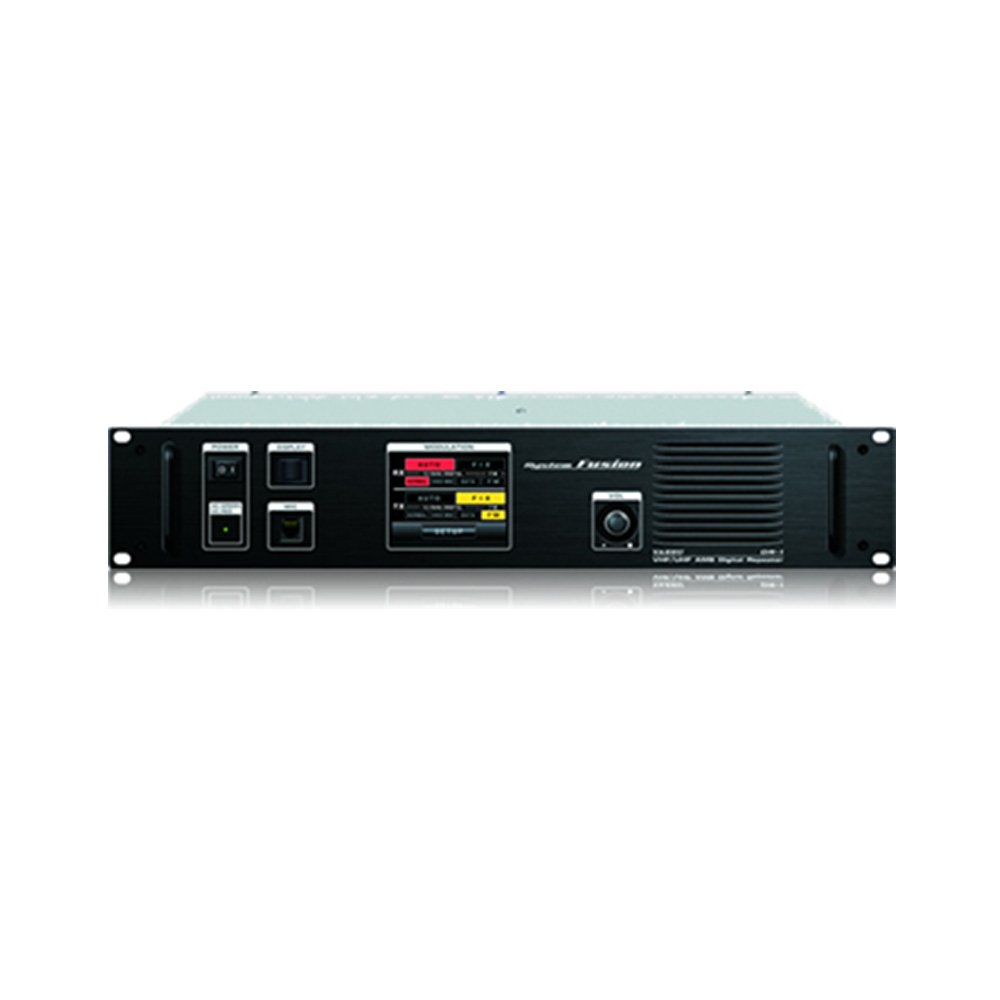
In simple terms, a two-way radio repeater like the Yaesu DR-1X is a device made out of 5 components – Receiver, Transmitter, Antenna, Feed Line, and Controller – that extends the range of radio signals. It takes in a weak signal and ‘repeats’ (transmits) it again at higher power allowing the signal to be relayed over longer distances, across mountains, or built-up areas, eliminating dead zones. They also eliminate interference and noise, making the signal clearer for more effective communication.
Having two-way capabilities also means that information can be exchanged back and forth between multiple parties. This has led two-way radio repeaters being referred to as ‘transceivers’ as they can both transmit and receive.
Two modes are present on a two-way radio repeater: Duplex (or Full Duplex) Mode and Half-Duplex Mode.
In Full Duplex mode a discrete channel is assigned for each flow of communication allowing you to both transmit and receive information simultaneously. In Half-Duplex mode, commencement of trans-receiving is signalled using a push-to-talk button.
Some newer two-way radio repeater models have a Hybrid mode available. This works similar to Duplex mode in default by operating on fixed RF channels while also giving you the option to manually select a physical RF channel depending on availability (similar to Simplex mode). This means additional flexibility when seeking out modes of communication.
What are the Benefits of a Two-Way Radio Repeater?
There are many benefits of having a two-way radio repeater on your marine vessel.
The simplest reason is you will have consistent access to radio communication even when further from shore. As you sail further from shore, your communication channels may become erratic or inconsistent until they vanish altogether. Having a repeater on board helps keep you in contact with on-the-ground staff and services for longer by boosting the radio signal.
Two-way radio repeaters also allow you to keep in contact with other fleet members while out at sea or use the radio to carry out business tasks.
How do I know if I need a Two-Way Radio Repeater?
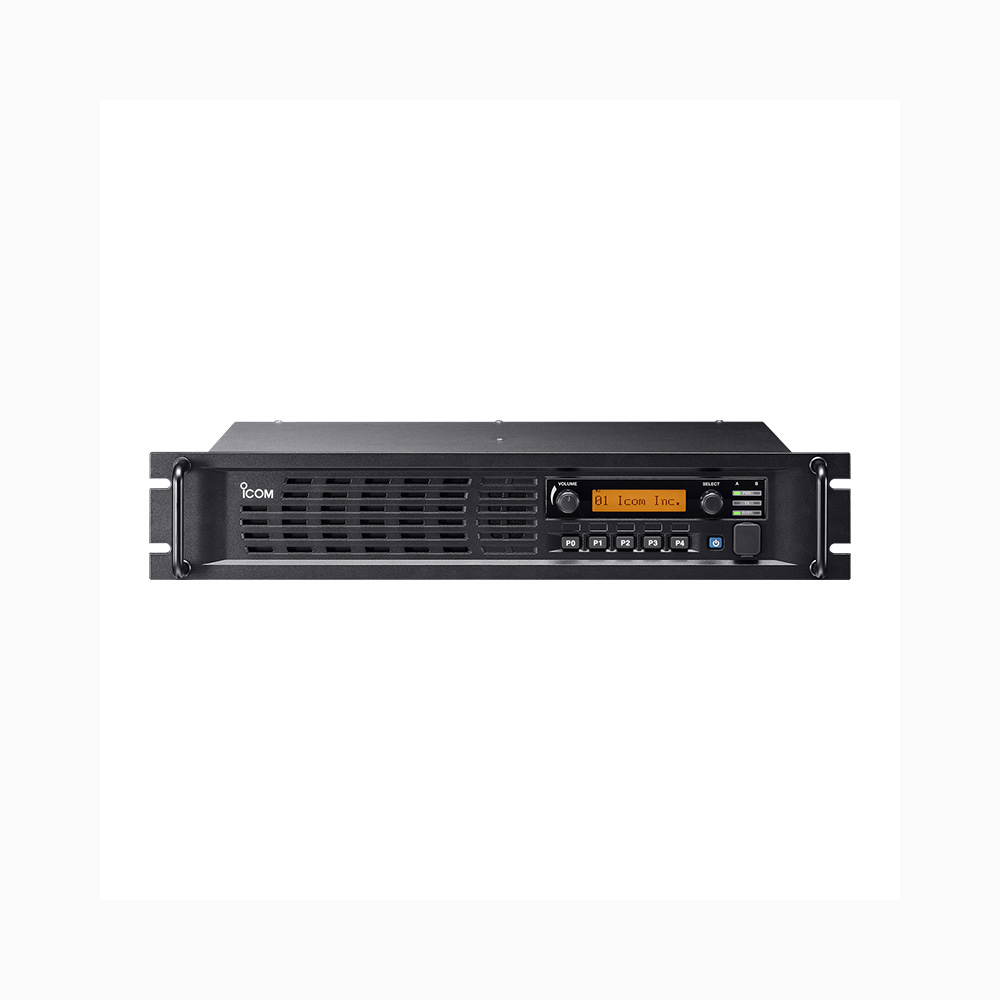
Two-way radio repeaters like the ICOM IC-FR6000 are commonly used in places where the base signal strength of marine radio equipment is poor. This poor signal could be due to distance from shore, distance from other vessels in your fleet, bad weather, static, or atmospheric conditions causing noise interference.
Even during normal conditions you might face inteference due to RF attenuation in the air, water, and surroundings that can obscure your radio signal. Two-way radio repeaters enable you to bypass such obstacles so you don’t have to worry about external factors such as the radio horizon or curvature of the earth.
Buy Quality Radio Communication Equipment on Tecomart
While two-way radio repeaters are not necessary for marine vessels out at sea to have, they have a strong advantage in ensuring you have an unbroken chain of communication with other key personnel. As with all safety-related equipment, it is imperative to buy your two-way radio repeater from a reliable and trusted supplier such as Tecomart.
Tecomart has been supplying marine navigation and radio communication equipment across the region for the past 28 years. We offer a variety of radio repeaters for sale to ensure that you can get high-quality equipment at an affordable price.
NAVTEX (sometimes styled as Navtex or NavText) stands for “Navigational Telex” and is an internationally used marine communication system for receiving maritime safety messages over a narrow band telex-type system.
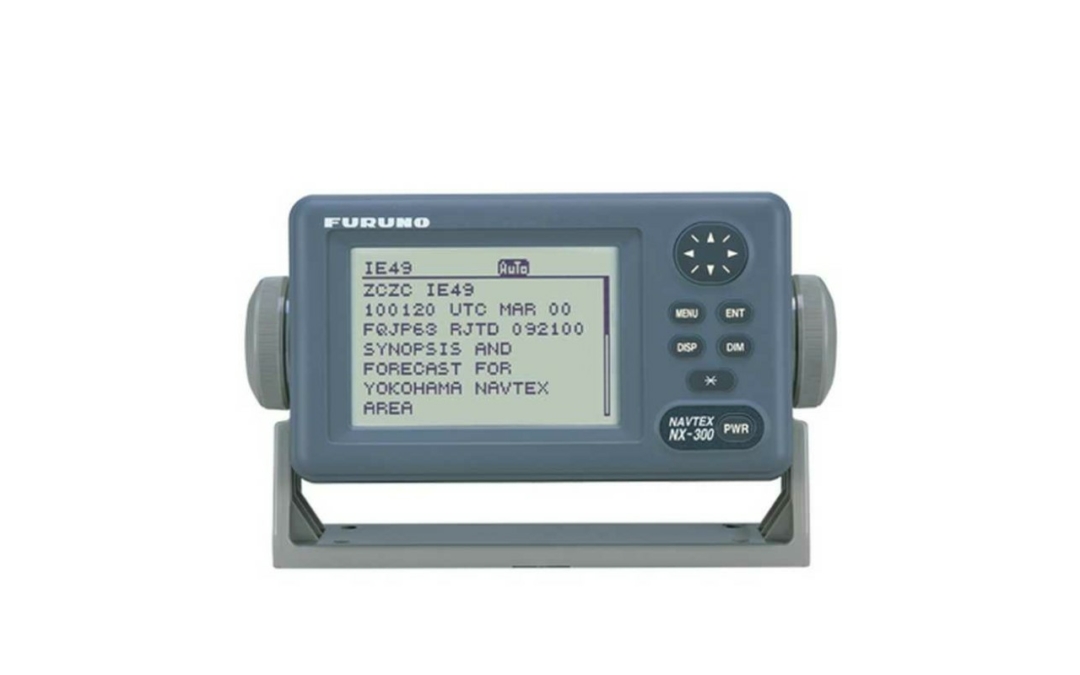
Some NAVTEX receivers are capable of automatically printing out these messages for easy accessibility, whereas others like the Furuno NX-300 are paperless and more economical.
NAVTEX forms a cornerstone of the wider Global Maritime Distress Safety System (GMDSS) and is an essential tool for ensuring your crew and vessel’s safety when out in open waters.
Our basic guide to NAVTEX will help you know the basics of this important system:
History of NAVTEX
Radio-telex technology has been used as far back as the 1930s. The marine application of the technology in particular however has its roots in the United Kingdom. In the 1970s, the British Post Office began sending weather forecasts and warnings to ships using a temporary radio-telex link. However this could be costly and time-consuming which led to research into ways to make this safety system more accessible and affordable to more vessels.
Ultimately in 1985, the NAVTEX format had its inaugural dispatch in the seas around the British Isles. By 1987 operational procedures had been drawn up and ratified by different countries using the NAVTEX system. In the 1990s NAVTEX was officially incorporated into the GMDSS and made available to vessels worldwide, and in 1993 the SOLAS Convention mandated that certain vessel sizes and classes would be required to carry NAVTEX equipment.
Since then, NAVTEX has continued to be a low-cost easy-to-understand way for ships of all sizes to receive essential safety information while within 200 nautical miles off-shore.
How NAVTEX works
NAVTEX transmits on the medium band at 518 kHz for messages relayed in English. Countries where the dominant language is not English typically have a National NAVTEX which broadcast the same notifications on the 490 kHz frequency. TIn areas where medium wave transmissions are difficult, there is an alternate frequency of 4209.5 kHz.
These messages are assembled and distributed by one of 21 Navareas designated worldwide, including five in the arctic regions. NAVTEX receivers on board a vessel can be programmed to only receive relevant messages from select NAVTEX stations. To further refine the selection, GPS positioning can be used so NAVTEX will automatically receive messages from the applicable Navarea within which the ship is sailing.
NAVTEX receives 14 types of messages:
A: Navigational Warnings
B: Meteorological Warnings
C: Ice reports
D: Search and Rescue information, piracy, and armed robbery
E: Meteorological forecasts
F: Pilot’s messages
G – K: Navigational Messages (i.e. AIS, Loran, Omega, Satnav)
The letters’ ZCZC’ indicate the start of a message. B1 – B4 represent the broadcasting station, subject letter, and serial number respectively. Finally the letters ‘NNNN’ indicate the end of a message.
Why use NAVTEX?
Compared to other newer forms of marine communication NAVTEX may seem outdated or old-fashioned. However it is a good insurance policy to help vessels keep abreast of important information in an emergency.
It is important to get a reliable GMDSS NAVTEX receiver setup such as the JRC NCR-333 from a trusted marine communication equipment supplier such as Tecomart. With over 28 years of experience in the marine navigation and communication industry, all of our equipment meets the highest standards possible to keep you and your crew safe when out at sea.
Find out more about our products in our FAQ page or get in touch for more information. Learn more about communication and navigation equipment for land and sea on our blog.
Automatic identification systems (AIS) help ships around the world identify each other and exchange information when they are out on the sea. They help those on board plan out and decide their course of action when navigating through a large body of water.
These systems are also used to communicate with land stations and coastal traffic centres to ensure your crew and vessel’s safe passage at all times. To make certain that AIS data can be utilised around the world in any situation, organisations like the International Telecommunication Union uphold standardised message types and telegrams that all AIS systems should be able to receive or send.
One of the key equipments that vessels use to communicate with other vessels, land stations, and coastal traffic is AIS Transponders.
What Are AIS Transponders?
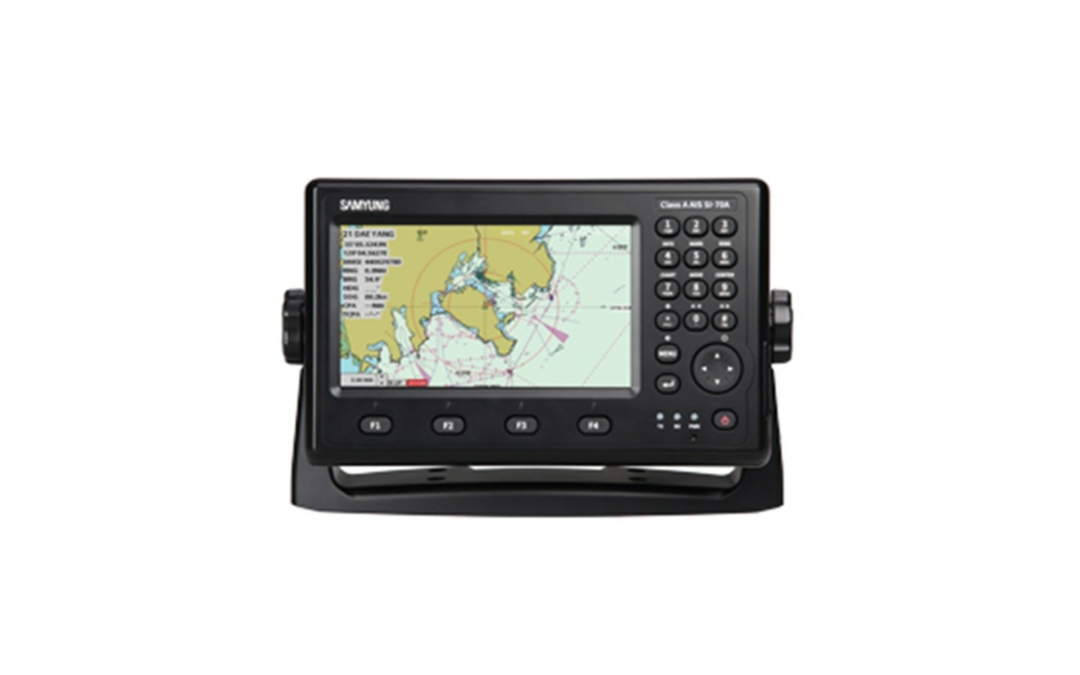
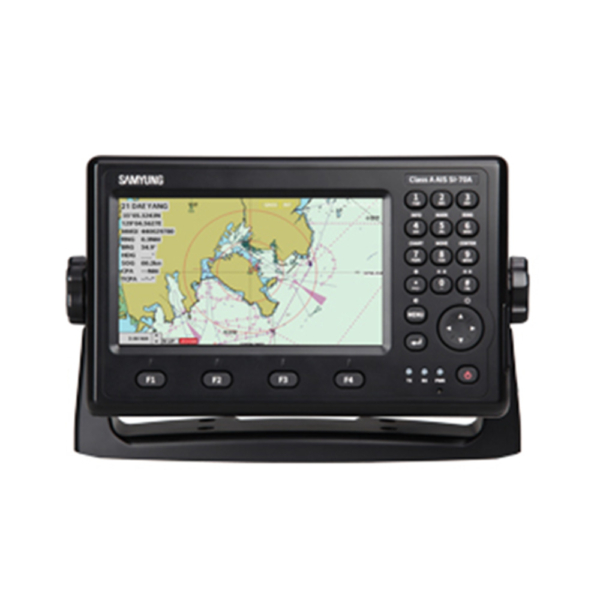
AIS transponders like the Samyung ENC SI-70A are marine communication equipment used to receive and transmit information between your own vessel and surrounding vessels, as well as to communicate with land stations and traffic centres on the coast.
There are two types of AIS transponders: Class A and Class B. These classes have different functionalities and features that determine whether they are more suitable for professional or recreational vessels.
Class A AIS Transponders
Class A AIS transponders like the Samyung ENC SI-70A are typically used for professional or commercial vessels. They can transmit and acquire at a much longer range, and with greater frequency. This allows them to interface with vessels located further away, helping to prevent collisions or accidents out at sea. These transponders also have a data interface which allows the ship’s crew to know up-to-date traffic conditions and receive navigation data.
Class A transponders can make use of the complex Self Organising Time Division Multiple Access (SOTDMA) system to coordinate with other transponders in the surrounding area to better utilise transmission frequencies. Generally, the transmission frequency will depend on the ship’s manoeuvring status and speed, which ranges from every 2 seconds to every 3 minutes.
This type of transponder is usually mandated for vessels that are (1) 300 gross tonnages and above engaged in international voyages, (2) 500 gross tonnages and above not engaged in international voyages, and (3) passenger ships of any size under the International Convention for the Safety of Life at Sea (SOLAS) convention.
Class B AIS Transponders
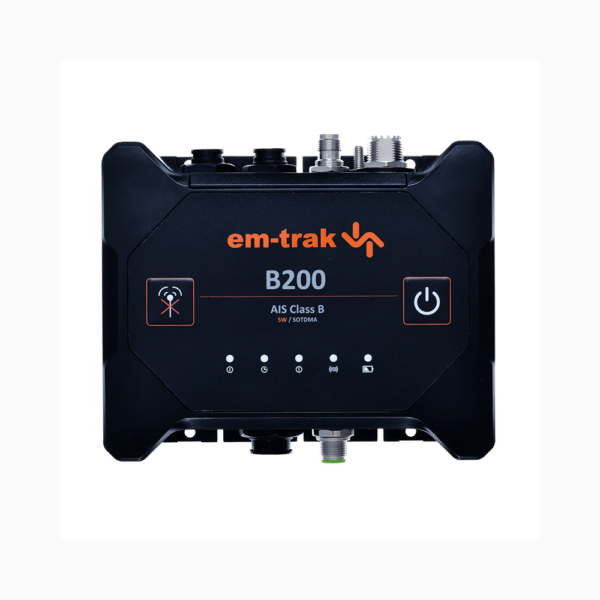
Class B AIS transponders like the em-trak B200 with GPS100 Antenna have a narrower scope of use, tend to be cheaper, and are typically used for recreational vessels. Their features are usually limited to only receiving and transmitting the most important data. This includes the vessel’s MMSI number, course, size, and current position. Because of this, this type of transponder is easier to use compared to its Class A counterpart as the user will only need to add in the name and dimension of the ship once and then set sail with it in use.
However because their functions are limited compared to the Class A models, Class B transponders tend to have a lower reporting rate, with limited transmission power at 2W.
While Class A transponders use SOTDMA to communicate, Class B transponders tend to use Carrier Sense Time Division Multiple Access (CSTDMA). This simply uses the free time slots to transmit their data, resulting in accurate data but with potential delays. However, there are now Class B transponders that can make use of SOTDMA technology.
The frequency of a Class B transponder’s transmission will depend on the frequency load and the vehicle’s speed. It ranges from every 5 seconds to every 3 minutes.
Get Quality Class A and B Transponders from Tecomart
When it comes to marine communication equipment, we at Tecomart provide you with a varied selection of reputable and trusted brands. We have a wide variety of Class A and Class B AIS transponders from brands such as RAYMARINE, EM-TRAK, ICOM, and more. All of our Class A and B AIS transponders meet the necessary requirements as regulated by governing bodies and documents such as SOLAS, ensuring that your crew and vessel can be kept safe throughout their journey.If you want to know more about our AIS transponders, feel free to contact us today!