To navigate the vast seas, you must have the right marine navigation equipment with you. An indispensable nautical navigational device you will need is the GPS. The GPS has revolutionised how ships navigate vast waters by providing accurate positioning information. In this blog, we explore the significance of GPS navigation at sea and its numerous benefits for commercial and amateur fishers or seafarers.
What Is a GPS and How Does It Work in Marine Navigation?
Essentially, a global positioning system (GPS) is a network of satellites and receiving devices used to identify the location of a vessel at sea. These satellites continuously transmit signals that GPS receivers onboard ships will receive. A GPS receiver can determine its precise location, speed, and time by triangulating signals from multiple satellites. This information is displayed on electronic navigation systems, enabling seafarers to sail through accurately and confidently.
The Benefits of Using GPS in Marine Navigation
As GPS gives you all the information you need to identify your location and find the best possible route, it ultimately leads to other benefits, including:
1. Enhanced speed and efficiency
When you need to be at a specific port at a certain time, a GPS makes it easier for you to determine the best possible route to take. Using a GPS allows you to consider different factors, such as currents, tides, and weather conditions when choosing the right course to your destination. It ultimately helps you confidently navigate through narrow channels, intricate coastlines, and even congested ports efficiently. If you’re looking for a GPS chart plotter that can help you go sail to your destination efficiently, then the Element Series from Raymarine can be a great choice.
2. Improved safety at sea
One of the most critical aspects of maritime navigation is ensuring the safety of the vessel and crew. GPS plays a pivotal role in enhancing safety at sea and having a reliable GPS is one of the top safety tips for any marine vessel. With real-time positioning information, ships can navigate with greater awareness and make informed decisions to avoid hazards. GPS allows sailors to steer clear of reefs, sandbars, and submerged objects that can cause grounding or damage to the vessel. It also aids in identifying and avoiding areas with strong currents or adverse weather conditions, reducing the risk of accidents and ensuring a safer voyage.
Nowadays, seafarers have marine equipment that combines navigation and communication in the form of an AIS transponder. There are modern AIS transponders that combine GPS technology and radio communication, enabling ships to exchange vital information, such as position, speed, and course. This real-time data allows ships to detect collisions early so that they can take proactive measures to avoid accidents and safeguard their crew.
An AIS transponder that comes with its own GPS technology is the AIS-50N from Samyung ENC. It’s a Class B AIS transponder that comes with a real-time display of navigation information, preloaded digital worldwide map cartography, and a cursor ID mode that allows easy readout of the target vessel. Learn more about the different classes of AIS transponders so you can find the right one for your vessel.
3. Reduce fuel consumption
Using GPS for navigation can reduce fuel consumption and limit costs by plotting the most efficient routes to the destination and avoiding unnecessary detours. To limit the time spent at sea and fuel used to get to your destination, a GPS can help you can take advantage of favourable currents and winds, as well as avoid congested shipping ports or busy shipping lanes with ease. Furthermore, having an accurate arrival time with the help of a GPS can enable you to reduce the need to maintain high speeds and waste fuel unnecessarily.
Get Your Marine Navigation Equipment from Tecomart
When it comes to trusted GPS equipment or other marine navigation equipment, you can trust that Tecomart has what you need. We are a trusted supplier of well-known marine navigation and communication equipment with a catalogue of tools and devices from brands, such as ICOM, SIMRAD, and SAMYUNG ENC. Browse through our broad list of marine equipment and get all you need for your next voyage at sea. To know more about the products we provide, please reach out to us.
In any voyage out into the sea, you must always have an emergency plan prepared. That way, when an unforeseen circumstance occurs, you will always be prepared to handle it and equipped with the right equipment. Training and practical drills are a great way to effectively learn how to handle any emergency at sea.
However, if you’re still starting and want to learn the basics of tackling emergencies efficiently, then here’s a brief guide on how to do so:
1. Stay Calm And Assess The Situation
You must stay calm in any emergency at sea to assess the situation. When you panic, it can lead to poor decision-making, causing harm to you and the people around you. If you’re feeling tense, take a few deep breaths and evaluate your surroundings before taking action. That way, you can effectively carry out your emergency plans for the specific situation.
2. Follow Emergency Procedures
Ensure you and everyone on board follow the procedures outlined in your plan, including calling for help through flares, visual signals, or radio communication equipment, deploying life rafts or even using fire extinguishers. The proper procedure must be carried out to ensure the safety of everyone onboard.
3. Always Wear Life Jackets
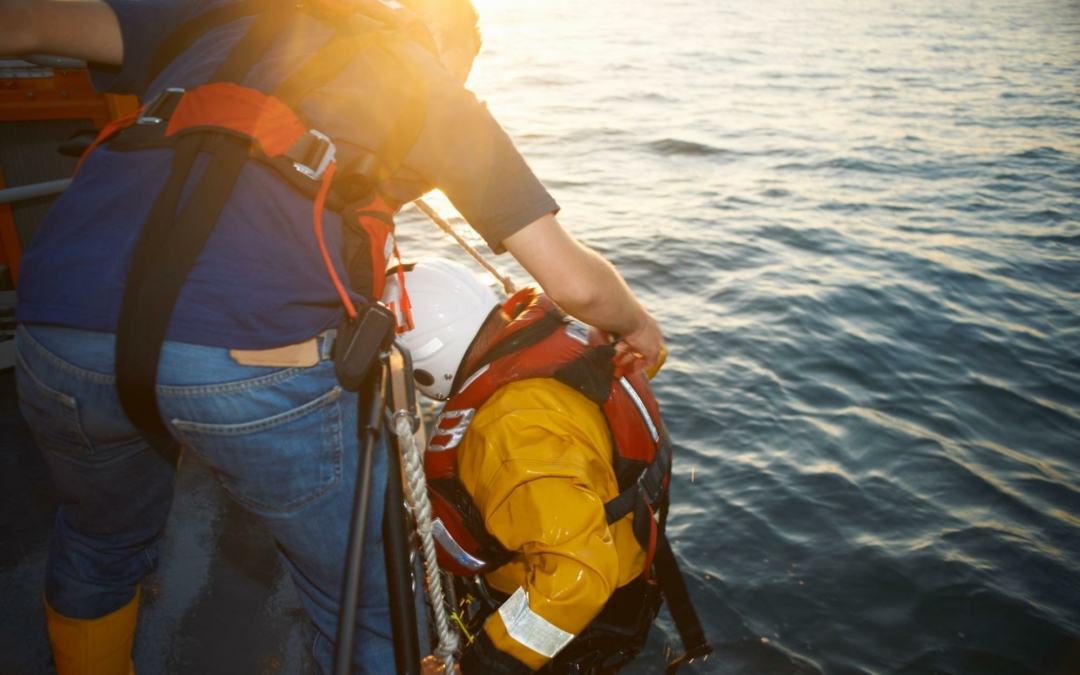
One of the most important safety measures when boating is having a life jacket onboard at all times, whether you or anyone else onboard knows how to swim. You must have a life jacket that properly fits each person on the boat. When an emergency at sea arises where everyone has to leave the boat, ensure that you and everyone onboard wear a life jacket at all times, especially when you have to be on the water.
4. Know Your Location And Put Your Emergency Navigation Plan Into Action
In times of emergency, you must be aware of your location and the potential hazards that could put you and your vessel at even more risk. Therefore, you should have an emergency navigation plan and marine navigation equipment. One of the most essential navigation equipment to have is a marine radar, which helps you detect other vessels, avoid obstacles, navigate in poor visibility, and even track weather conditions. Marine radar is useful in any emergency at sea since it provides your location in real-time, making it easier for the coastguard or nearby vessels to find you and provide assistance.
If you’re looking for marine radars for sale from reputable brands like Garmin and Furuno, you can find what you need at Tecomart.
5. Have a Way to Communicate Your Emergency
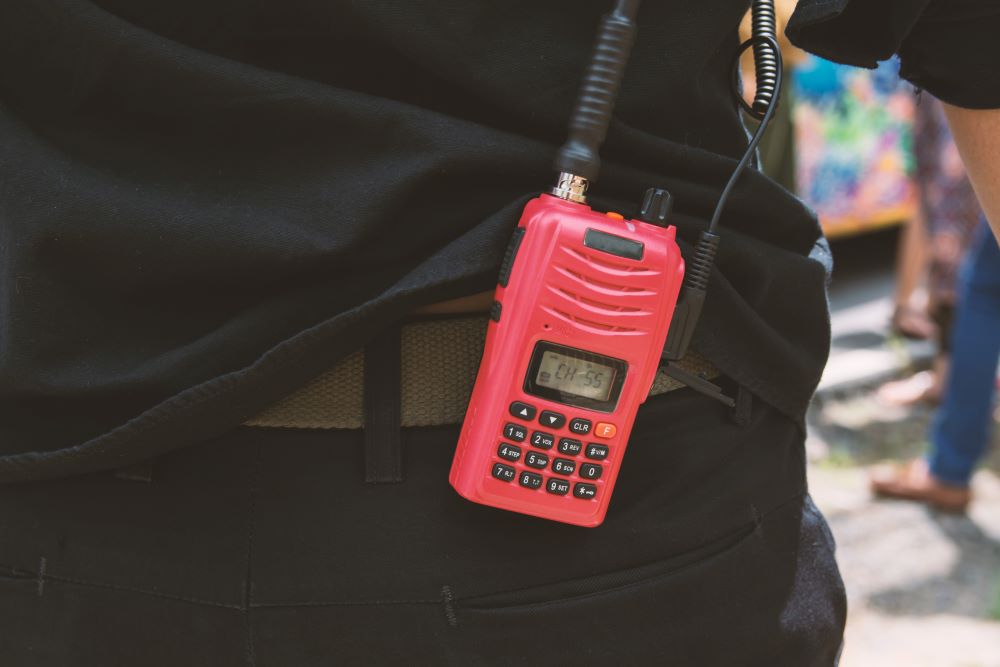
Before going out into the sea, you must always have marine communication equipment on the boat, like radio communication devices. If you have a small vessel, you can opt for a handheld VHF marine radio, like the ICOM IC-M37 or the Standard Horizon HX-300. Medium-sized vessels can opt for fix-mounted marine VHF devices. You can learn more about marine VHF and why it’s necessary for your vessel when you check out our previous blog. Having flares and visual signals can also help when you need the coast guard or other vessels to locate you when you are in distress.
When making a distress call on your VHF marine radio during emergencies, the call should include “Mayday!” followed by the name of your vessel, your location, and a brief description of your emergency. Stay on your radio and wait for the coastguard or other vessels to respond.
Get Your Radio Communication Equipment from Tecomart
One of the basics to marine safety for any vessel is to have an emergency safety plan. You must always be prepared for any emergency while boating at sea. Besides training and planning procedures for any emergency, you must also have the right marine equipment with you. Tecomart has what you need to navigate and communicate at sea. We have VHF marine radios, handheld VHF radios, and marine radars for sale, all from trusted marine navigation and radio communication suppliers. Feel free to contact us today to learn more.
Amateur radio (or ham radio) is a way to access radio communication lines for non-commercial purposes. It’s commonly used when on the road (e.g. by truckers who have to drive for long periods) or in emergencies when other means of communication are not available. However, many amateur radio enthusiasts also enjoy the challenge of figuring out how the equipment works and connecting with other enthusiasts in Singapore and around the world.
If you are hoping to begin amateur radio in Singapore, here’s what you need to know:
1. You’ll need a license from the IMDA to operate.
Singapore’s Infocomm Media Development Authority (IMDA) is the sole body that can issue Amateur Station Licenses to interested individuals. Only individuals aged 16 and above may apply for an Amateur Station License, and those under 21 years old must have their application countersigned by a parent, guardian, or approved individual.
You are required to sit for the Radio Amateur’s Examination to obtain a license. The General Class license is issued once you have passed both Parts I & II of the exam, and the Restricted Class license is given if you have only passed Part I.
If you are wondering how to navigate the licensing process, you can reach out to the Singapore Amateur Radio Transmitting Society (SARTS). SARTS is a non-profit organisation for amateur radio operators and enthusiasts in Singapor. They hold meetings for members and share news, equipment reviews, and other resources related to amateur radio communications.
2. There are many types of amateur radio available.
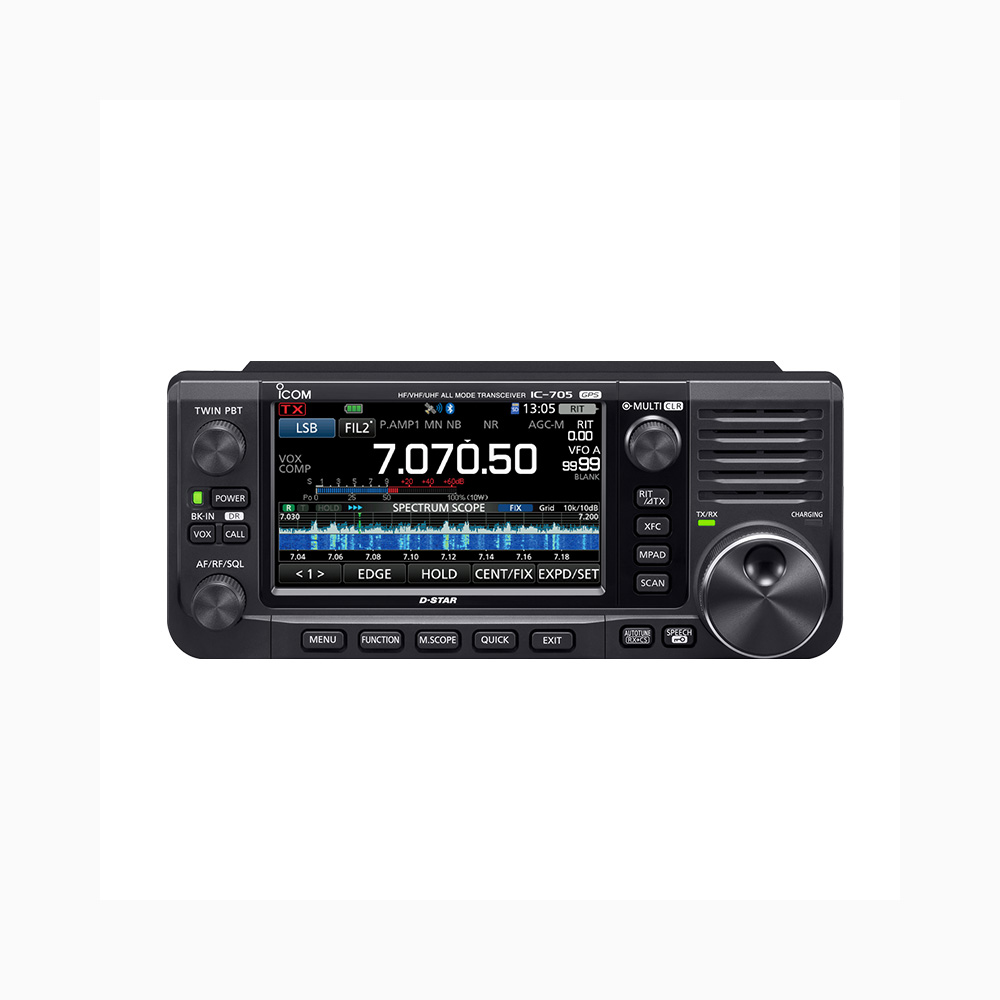
‘Amateur radio’ is an umbrella term, but there are many types of radio devices to choose from, such as Citizen’s Band (CB) and Single Side Band (SSB). Different devices will be able to assess different frequencies, wavelengths, or emissions, and have different controls. Find out more about ham VS CB radio equipment before making your choice.
Do note that in Singapore, the IMDA controls the frequencies you can operate amateur radio on, of which comprehensive information is available in the latest IMDA Amateur Handbook.
3. You’ll need some essential equipment to get started.
These are some of the essential amateur radio equipment you’ll need to buy before you begin:
As a supplier of communications and navigation equipment in Singapore and the Asia-Pacific region since 1994, we strive to provide our customers with only the highest quality solutions to meet their unique technical needs. Get in touch to find out more about our products and solutions, or check out our FAQs. You can also discover related resources and tips on our blog.
When you’re planning for a nautical voyage, you need to hope for the best but prepare for the worst. No matter how thoroughly you plan ahead for contingencies, there’s always a chance that you might have to face your worst fears when you’re at the mercy of the seas.
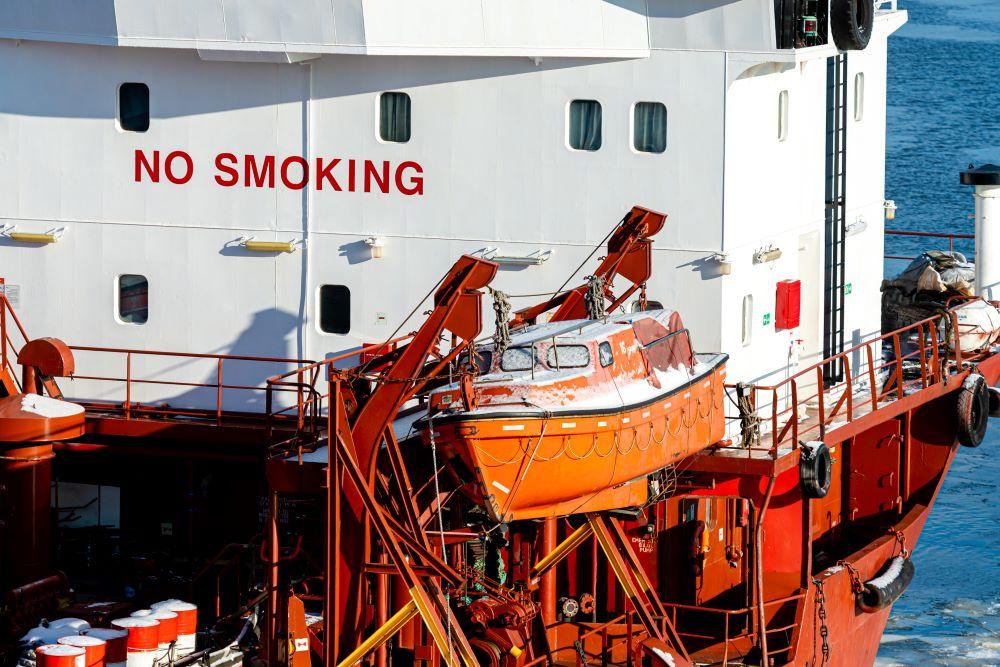
In the event of an unexpected emergency, you and your crew might have to bail from the ship and rely on your lifeboats to survive out on the water. Lifeboats – though you should hope to never need to use them – are thus a key part of your nautical survival strategy and should be treated as such. This means dedicating time, effort, and resources to ensure your lifeboats are properly stocked, inspected, and resupplied so that they’re ready for use at a moment’s notice.
Here’s a list of some of the key equipment to include in your lifeboats in order to increase you and your crew’s chances of survival:
1. GMDSS (Survival craft radio)
A key system in ensuring nautical safety is the Global Maritime Distress and Safety System (GMDSS). The GMDSS a SOLAS-mandated requirement for many ships around the world and includes sub-systems and components such as VHF radios, NAVTEX receivers, SARTs, and EPIRBs. While your ship should already have GMDSS equipment for safe communication and navigation at sea, it’s also a good idea to include portable GMDSS (Survival Craft Radio) in every lifeboat. These handheld devices are typically waterproof and are usually supplied with two batteries, a non-rechargeable primary battery and a rechargeable secondary battery. You can also consider having a handheld VHF marine radio to further enhance communication at sea.
2. Survival essentials
First-aid kits, compasses, Swiss Army Knives or multi-tools, freshwater, food rations, thermal blankets, and other survival essentials could mean the difference between life and death on land or out at sea. Each lifeboat should have their own set of survival essentials on hand along with a checklist to ensure everything is in place and accounted for.
Ensure the Safety of your Crew with Tecomart
As a radio communication supplier in South and Southeast Asia, Tecomart has a wide range of VHF marine radios and other marine safety essentials for sale. Our products are sourced from renowned brands such as Motorola, ICOM, Yaesu, Standard Horizon, and Simrad, so you can find what suits your needs best.
Having been in the communication and navigation fields since 1994, our catalogue of marine navigation equipment and marine communication equipment are carefully selected to meet the needs of sailors in the region. Get in touch for a quote, or check out our FAQs for more information on our products and services.
When you’re out at sea, there’s nothing more important than ensuring the safety of your crew. No matter how small or large your marine vessel, being out in the open ocean still leaves you vulnerable to the unexpected whims of the elements.
A key part of ensuring you and your crew’s safety is being able to maintain communication with crew and emergency personnel back on land, as well as other vessels in the water. Maintaining clear lines of communication enables you to receive immediate updates on weather conditions, inform other vessels of your relative position, transmit emergency broadcasts, and even join in on search-and-rescue missions if necessary.
And when it comes to maintaining communication while at sea, one must-have piece of equipment is a Marine Very High Frequency (VHF) Radio. Read on to find out more about what marine VHFs are, their key features, and when you can expect to use yours.
What is a Marine VHF Radio?
As its name suggests, a marine VHF radio is a type of communication equipment that utilises Very High Frequency (VHF) radio waves to communicate with other operators, usually between 156 MHz to 163 MHz.
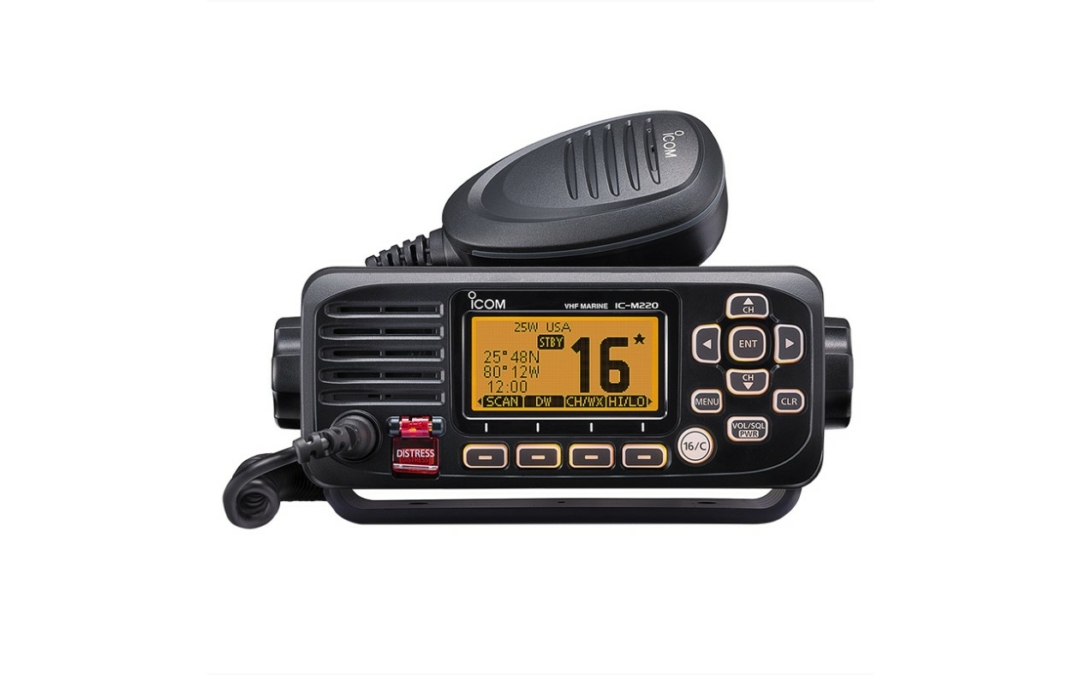
It can come in the form of a fixed mount marine VHF (pictured: IC-M220 Marine VHF Transceiver) that’s bolted onto your vessel, or a lower-power handheld marine VHF for greater portability and versatility during emergencies. Your vessel may even be mandated to have a marine VHF set installed on board, in line with international and local regulations.
Marine VHF radios operate using ‘line of sight’, similar to other radio communication equipment. This means the antennas on both ends of the channel need to be able to ‘see’ or reach each other without being blocked by land masses and other obstructions. Additional equipment such as marine VHF antennas, antenna rotator systems, and two-way radio repeaters thus go a long way to ensuring your marine VHF operates smoothly under any conditions, with a typical range of 25 to 30 nautical miles.
It is also important to note that marine VHF sets bought in a specific country will usually come pre-tuned to transmit and receive on a series of locally used FM band channels, as well as certain channels that are internationally recognised and agreed upon. One such example of the latter is Channel 16, which is an international channel for distress and safety. If your vessel is planning to cross into international waters and other nations’ borders, do ensure that your VHF is able to pick up essential local broadcasts in your respective destinations.
How are Marine VHF Radios used?
Typical marine VHF sets usually come with certain features designed and fine-tuned to enhance and ensure safety at sea, such as:
Press to talk (PTT) functionality for direct and instant communication with other VHF operators at sea or on land
Digital Selective Calling (DSC) for transmitting important updates from vessels or land
Squelch control to minimise interference and white noise for clear transmission
The DSC feature comes with on-land and handheld VHF radio sets, and is part of the larger GMDSS (Global Maritime Distress and Safety System) protocol. The GMDSS uses both satellite and terrestrial communication systems to ensure vessels can maintain necessary communication at all times, helping to protect you and your crew in case of an emergency.
Some marine VHF sets also come with built-in GPS which can help search-and-rescue teams or ground crews locate your vessel more readily and accurately in case of an emergency.
Buy Marine VHF Radio Equipment and More at Tecomart

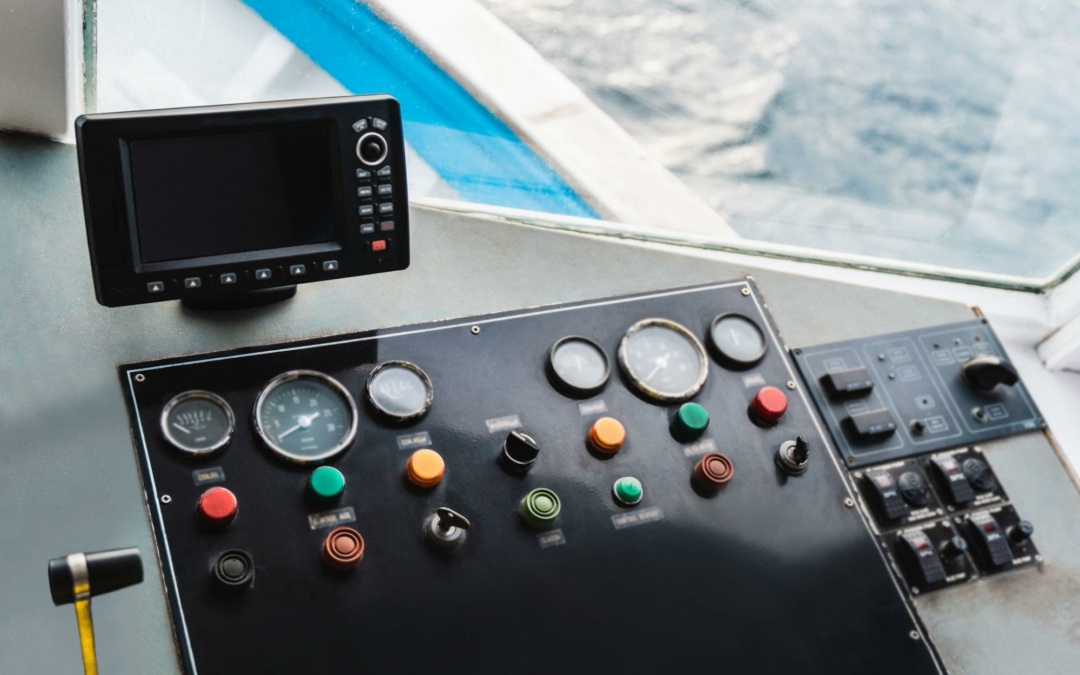
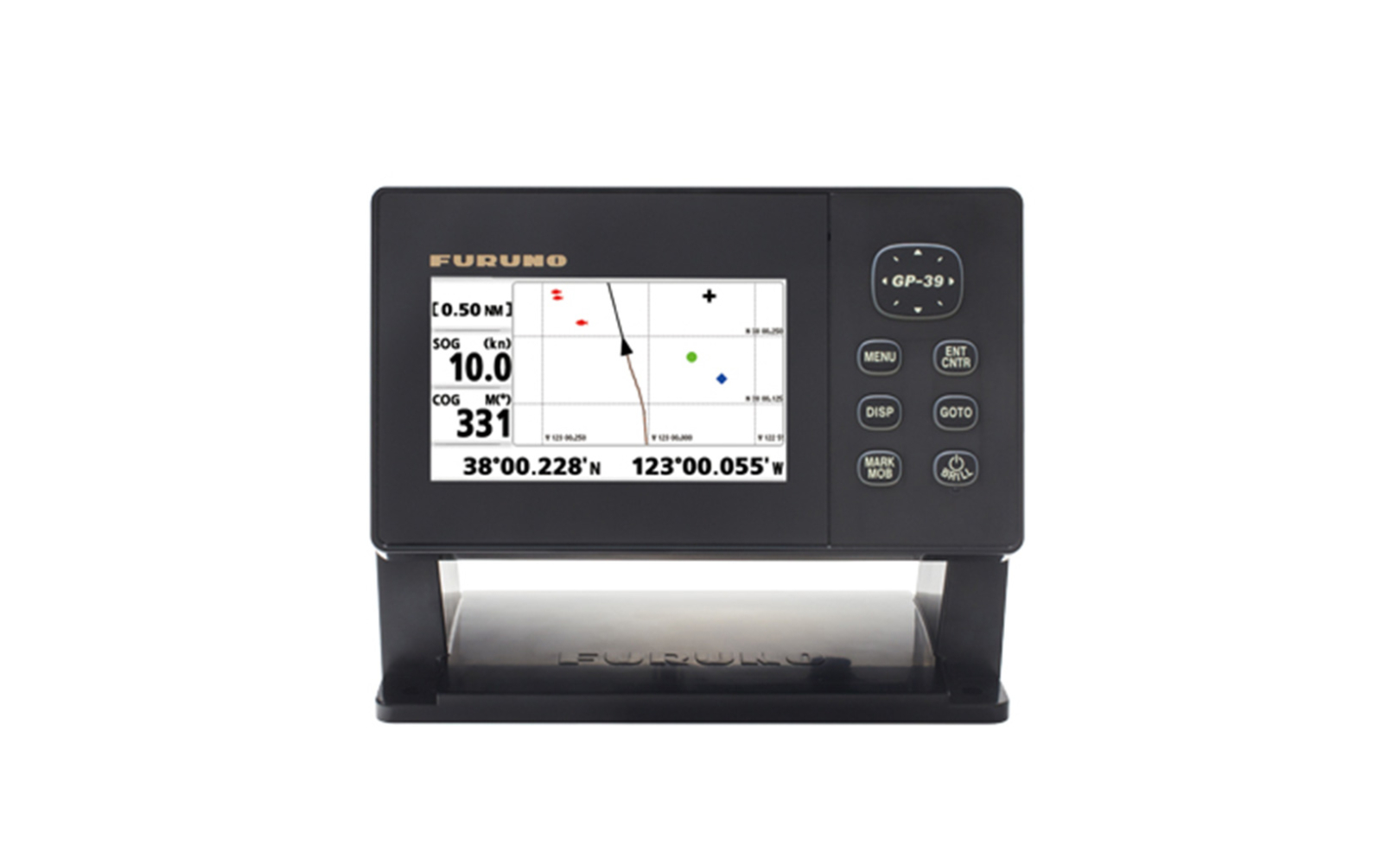 When you need to be at a specific port at a certain time, a GPS makes it easier for you to determine the best possible route to take. Using a GPS allows you to consider different factors, such as currents, tides, and weather conditions when choosing the right course to your destination. It ultimately helps you confidently navigate through narrow channels, intricate coastlines, and even congested ports efficiently. If you’re looking for a GPS chart plotter that can help you go sail to your destination efficiently, then the Element Series from Raymarine can be a great choice.
 One of the most critical aspects of maritime navigation is ensuring the safety of the vessel and crew. GPS plays a pivotal role in enhancing safety at sea and having a reliable GPS is one of the top safety tips for any marine vessel. With real-time positioning information, ships can navigate with greater awareness and make informed decisions to avoid hazards. GPS allows sailors to steer clear of reefs, sandbars, and submerged objects that can cause grounding or damage to the vessel. It also aids in identifying and avoiding areas with strong currents or adverse weather conditions, reducing the risk of accidents and ensuring a safer voyage.
Nowadays, seafarers have marine equipment that combines navigation and communication in the form of an AIS transponder. There are modern AIS transponders that combine GPS technology and radio communication, enabling ships to exchange vital information, such as position, speed, and course. This real-time data allows ships to detect collisions early so that they can take proactive measures to avoid accidents and safeguard their crew.
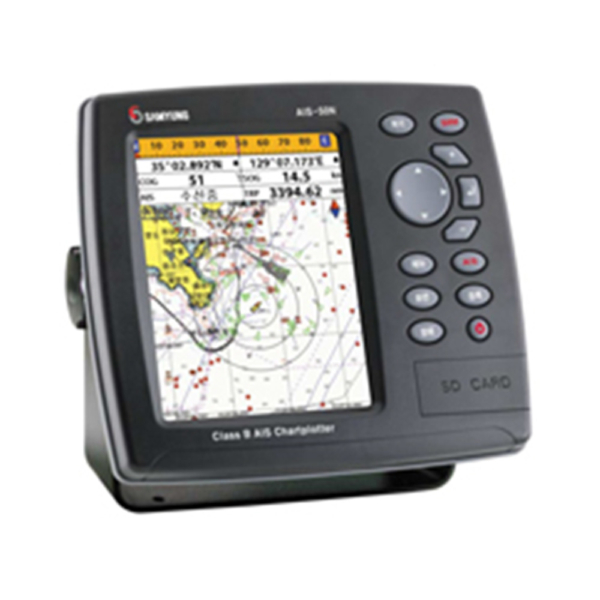
An AIS transponder that comes with its own GPS technology is the AIS-50N from Samyung ENC. It’s a Class B AIS transponder that comes with a real-time display of navigation information, preloaded digital worldwide map cartography, and a cursor ID mode that allows easy readout of the target vessel. Learn more about the different classes of AIS transponders so you can find the right one for your vessel.
One of the most critical aspects of maritime navigation is ensuring the safety of the vessel and crew. GPS plays a pivotal role in enhancing safety at sea and having a reliable GPS is one of the top safety tips for any marine vessel. With real-time positioning information, ships can navigate with greater awareness and make informed decisions to avoid hazards. GPS allows sailors to steer clear of reefs, sandbars, and submerged objects that can cause grounding or damage to the vessel. It also aids in identifying and avoiding areas with strong currents or adverse weather conditions, reducing the risk of accidents and ensuring a safer voyage.
Nowadays, seafarers have marine equipment that combines navigation and communication in the form of an AIS transponder. There are modern AIS transponders that combine GPS technology and radio communication, enabling ships to exchange vital information, such as position, speed, and course. This real-time data allows ships to detect collisions early so that they can take proactive measures to avoid accidents and safeguard their crew.
An AIS transponder that comes with its own GPS technology is the AIS-50N from Samyung ENC. It’s a Class B AIS transponder that comes with a real-time display of navigation information, preloaded digital worldwide map cartography, and a cursor ID mode that allows easy readout of the target vessel. Learn more about the different classes of AIS transponders so you can find the right one for your vessel.